FintechBackendPayments
Idempotency Keys — The Unsung Hero of Every Payment System
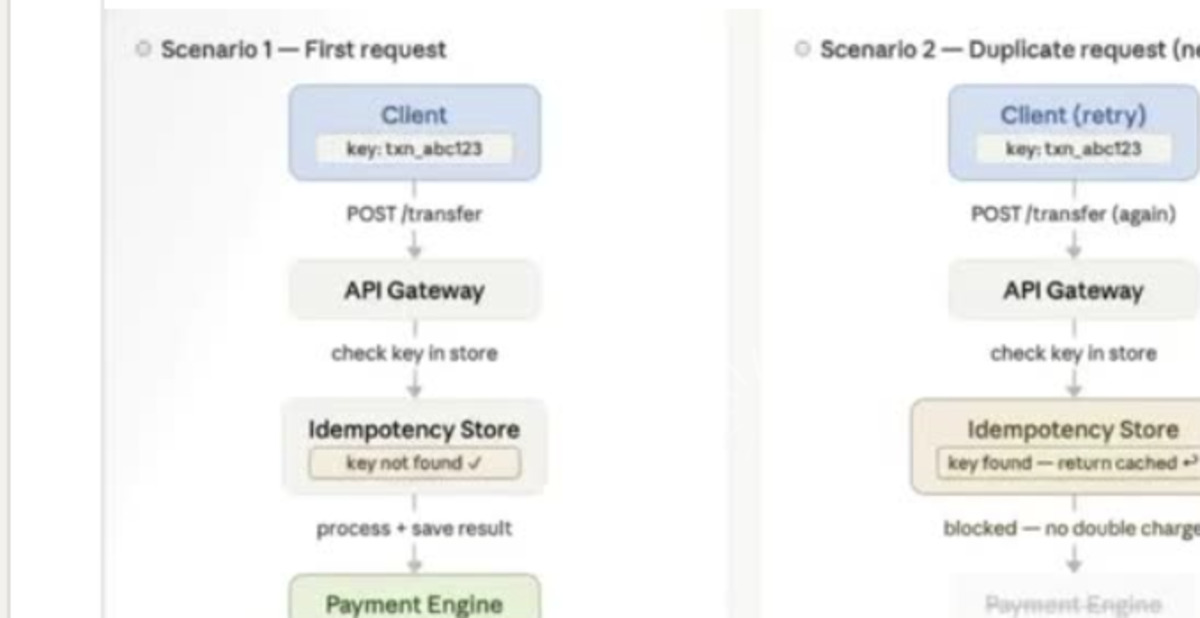
Think of an idempotency key like a receipt number.
You submit a transaction. Something fails mid-way — a timeout, a network glitch, a server hiccup. You retry. But the system already saw that receipt number. So instead of processing again, it just returns: "Already done."
No double charges. No duplicate transfers. No angry users.
Why this matters
In distributed systems, failures are not exceptional — they're routine. Networks drop packets, servers restart, clients time out and retry. If your payment endpoint processes every request it receives, a single flaky connection can charge a customer twice.
The fix is simple in concept:
- The client generates a unique key for each logical operation (not each request).
- The server stores the key with the operation's result.
- If the same key arrives again, the server returns the stored result instead of re-executing.
Implementation notes
- Store keys with a TTL appropriate for your retry window (24 hours is common).
- The key check and the operation must be atomic — use a unique constraint in your database, not an application-level check.
- Return the original response for repeated keys, including the original status code.
In fintech, retry logic without idempotency isn't safety — it's a liability.